Showing posts with label business. Show all posts

Saturday, March 17, 2012

Sell Your Employees in Order to Sell Your Customers

Refresh, Reboot, Reinvent


There is a great article/column in Forbes this week "JCPenny's New Stragegy A Tough Sell on the Sales Floor". It is a first person account of a family's quest in search of the perfect and perfectly priced sofa. The experiences the author describes ring true, especially for the home furnishings industry because we are very entrenched in discount pricing models and almost used car salesman techniques with artificial mark ups, crazy sales discounts, and spiffs.


However, beyond the initial shopping trip for a sofa is a much bigger lesson that applies to all industries and businesses. When making a strategic change to the business model it is imperative to remember that your team, whether they are in direct consumer sales, b to b service, or just in house administrative--they are your most important customer. If you do not take the time to win over your employees about the strategic shift of the company, then the shift will falter.


When Howard Schultz returned to Starbucks as CEO in 2007 he recognized that first and foremost he needed to focus on the core brand, its values, and its ethos. In order to do that he needed to retrain, reinvigorate, and refresh the workforce. He took the unprecedented move of closing down all the stores, flying managers into a central location and focusing on the details that, when combined are the Starbuck's brand. 
Onward: How Starbucks Fought for Its Life without Losing Its Soul
Link to Book


"On February 23, 2008, “I closed every store to retrain 115,000 people – I said we were going back to the roots of the company.” Of course, the media frenzy that ensued from this decision brought many to believe that the end of Starbucks was near – that they were no longer relevant. Schultz admits it was a bold decision to retrain every single employee. His explanation? “It was honest, it was authentic, and it was necessary.” The company lost $6 million that day. And as he said, Starbucks still had a long, long way to go in solving their mounting problems – but this was a start.
Starting over, he said, involved metaphorically asking the question of employees,What does it mean not to be a bystander? “From this point, we had to create, attract and create new customers.” Gone, he says, was the time that Starbucks could do no wrong — that the company was on a “magic carpet ride” – and that profitability and like-ability would happen automatically with every move the company made. Gone was the time that Starbucks was leading the conversation — now, they had to find a way to take part in the larger conversations that were happening." (source)


In the case of JCPenny's where they are trying to basically start an entirely new brand but based on a foundation of an old brand, retail stores, and employees, it is not enough to roll out a new ad campaign, pricing structure, and updated merchandise. 


If the railroad cars are not connected to the engine, the engine will still arrive at its destination, but with what to show for it?
JCP needs to take the time to establish and secure the connections between each boxcar before the engine leaves the station. Its too late now of course, but they still have time to catch up. As Schultz proved, an existing brand can be put back together if you take the time to stop the engine. Regroup, reconnect, and redefine together the action plan and shared goals. Hopefully JCP does this. 


For all those with businesses that need a refresh, remember that (1) it's not too late and (2) take the time in the beginning and continue to maintain the brand because that is always easier than a mid-journey stop and restart.

Friday, August 19, 2011

Business: Bad Customer Service is Killing Us

In my previous Zappos post suggested that the airline industry get some immediate assistance from the Zappos Insights team on "How to Deliver Happiness".


source
I've just come across this funny YouTube video called "If Air Travel Worked Like Health Care".


It made me think, wow...if the service provided by the Health Care Industry is so bad that Air Travel is being used as an example of good customer service, than Health Care is more f*!#ed-up as I thought.


Delivering Happiness > Pretty Crappy > Really, utterly crap-tastic
Illustrated in Mathematical terms for more left brain readers, using the transitive relation theory of basic algebra which states:


whenever A > B and B > C, then also A > C

A = Zappos' customer service = the business model is called "Delivering Happiness"
B = Airline Industry customer service = pretty crappy customer service; ref prev blog post 
C = American Healthcare customer service = really, utterly crap-tastic


Conclusion
Aside from the politics, there is an subset of the the Service Design industry which focuses solely on delivering customer satisfaction and improving efficiencies through better design and innovation in Healthcare, and a byproduct of these changes has been reduced costs and improved patient care. Perhaps we should approach America's healthcare dilema with a "Delivering Happiness"  rather than a 6 Sigma Strategy? 


Q: What does this blog post have to do with the home furnishings industry?!


A: All businesses big and small, manufacturing in the US or importing from abroad, retailing product, or designing homes have employees. And, those businesses must consider the cost of healthcare for their employees and themselves. It is a big problem in the US economy and I've heard it called basically a tax on businesses or individuals or in most cases both. Not a tax levied by the government, but by the bloated healthcare industry which costs individuals, families, and businesses 10, 20, even 30% more in the US than it does in all other industrialized nations. 
Healthcare Expenditure as a share of GDP Among OECD Countries 2009 graph source, original data source


These additional costs increase the final product cost of our businesses and reduces our competitiveness in a global economy.


Whether those nations have nationalized heathcare, private, or a combination, they are still delivering better service at lower costs than the US system. 


Our businesses and therefore our economy is not going to be able to escape this economic quagmire without a massive fix to the healthcare industry. 


This is not a political issue, but an economic one. In the end, whether we take the red road, the blue road, or something in between, we need to end up with better and more efficient health service that will result in healthier people, businesses, and profits.  

Monday, July 11, 2011

What I'm Listening to Today: The Long Tail: Why the Future of Business Is Selling Less of More (Audible Audio Edition): Chris Anderson, Christopher Nissley: Kindle Store

I was referred to this book through my last Audio-book listen by author Tony Hseih, Zappos Co-founder in his book Delivering Happiness: A Path to Profits, Passion, and Purpose . It is one of several books he recommends, and I have a stack from my public library of the others lined up for listening.

I am mid-chapter 5 right now, and so far my takeaway notes are 6 pages long. The most important point of the book, and the origin of the title is that the old 80/20 rule of product sales is no longer a valid merchandising rule in the digital retail era

Chris Anderson
The new rule, the "Long Tail" is a 98% rule. The author Chris Anderson, a former editor at the Economist and the Current Editor of Wired Magazine provides numerous examples of the lost sales opportunities which were caused by the fixed resources of brick and mortar retail of shelf space, inventory, and distribution. In order to make profits through inventory turns only the better and best sellers are inventoried. 

However, in the digital world, the niche products market through 'new math' incremental sales multiplied by massive quantities of products equal 1/4 of revenue for companies like I-Tunes, Amazon, and Netflix. They have found that the more titles they add sales increase, rather than divide. 


My big questions mid-read/listen:

  • This concept great for digital, but how can this rule apply to durable consumer goods, like Furniture? 

  • How can smaller brick and mortar stores benefit from this digital attack on the big box retailers? 
  • How can furniture designers benefit from the Long Tail sales opportunity. (Etsy!!)
So far, Chapter 4 did a great job of summarizing the history of the shift from one of a kind manufacturing and local sales to mass production and mass distribution sales. His emphasis on the emerging technology, new distribution networks, and manufacturing are 3 key elements in the creation of a new business model. Through seeing the history from Sears (NASDAQ: $SHLDto Amazon (NASDAQ: $AMZN), I have already started to see major missed opportunities for and threats to today's big retailers including the behemoth Wal-Mart (NYSE: $WMT). I'll write more about that right now but for now I'll say that the song "Video Killed the Radio Star" has been running through my mind since I listened to Chapter 4. The parallel I'm trying to figure out is, if we know what killed the radio star, what will kill the 'big box retailer'? Because I believe that is a possibility based on their current business strategies.


Author's Summary
Our world is being transformed by the Internet and the near limitless choice that it provides to consumers; tomorrow's markets belong to those who can take advantage of this. The Long Tail is really about the economics of abundance, an entirely new model for business that is just starting to show its power as unlimited selection reveals new truths about what consumers want and how they want to get it. The record business has been transformed by iTunes and Rhapsody; a similar transformation is coming to just about every industry imaginable.


What happens when everything in the world becomes available to everyone? When the combined value of all the millions of items that may sell only a few copies equals or exceeds the value of the few items that sell millions each? When a bunch of kids with no profit motive can record a song or make a video and get the same electronic distribution for it as the most powerful corporation?

Chris Anderson, editor in chief of Wired magazine, first explored "The Long Tail" in an article that has become one of the most influential business essays of our time. Using the worlds of movies, books, and music, he showed how the Internet has made possible a new world in which the combined value of modest sellers and quirky titles equals the sales of the top hits. He coined the term "The Long Tail" to describe this phenomenon, a phrase that's since appeared in boardrooms and media around the world.

"In short, though we still obsess over hits," Anderson writes, "they are not quite the economic force they once were. Where are those fickle consumers going instead? No single place. They are scattered to the winds as markets fragment into a thousand niches." ©2006 Chris Anderson. All rights reserved; (P)2006 Hyperion. All rights reserved.


Editorial Reviews

From Publishers Weekly

Wired editor Anderson declares the death of "common culture"—and insists that it's for the best. Why don't we all watch the same TV shows, like we used to? Because not long ago, "we had fewer alternatives to compete for our screen attention," he writes. Smash hits have existed largely because of scarcity: with a finite number of bookstore shelves and theaters and Wal-Mart CD racks, "it's only sensible to fill them with the titles that will sell best." Today, Web sites and online retailers offer seemingly infinite inventory, and the result is the "shattering of the mainstream into a zillion different cultural shards." These "countless niches" are market opportunities for those who cast a wide net and de-emphasize the search for blockbusters. It's a provocative analysis and almost certainly on target—though Anderson's assurances that these principles are equally applicable outside the media and entertainment industries are not entirely convincing. The book overuses its examples from Google, Rhapsody, iTunes, Amazon, Netflix and eBay, and it doesn't help that most of the charts of "Long Tail" curves look the same. But Anderson manages to explain a murky trend in clear language, giving entrepreneurs and the rest of us plenty to think about. (July)
Copyright © Reed Business Information, a division of Reed Elsevier Inc. All rights reserved.

From Bookmarks Magazine

In The Long Tail, Chris Anderson offers a visionary look at the future of business and common culture. The long-tail phenomenon, he argues, will "re-shape our understanding of what people actually want to watch" (or read, etc.). While Anderson presents a fascinating idea backed by thoughtful (if repetitive) analysis, many critics questioned just how greatly the niche market will rework our common popular culture. Anderson convinced most reviewers in his discussion of Internet media sales, but his KitchenAid and Lego examples fell flat. A few pointed out that online markets constitute just 10 percent of U.S. retail, and brick-and-mortar stores will never disappear. Anderson's thesis came under a separate attack by Lee Gomes in his Wall Street Journal column. Anderson had defined the "98 Percent Rule" in his book to mean that no matter how much inventory is made available online, 98 percent of the items will sell at least once. Yet Gomes cited statistics that could indicate that, as the Web and Web services become more mainstream, the 98 Percent Rule may no longer apply: "Ecast [a music-streaming company] told me that now, with a much bigger inventory than when Mr. Anderson spoke to them two years ago, the quarterly no-play rate has risen from 2% to 12%. March data for the 1.1 million songs of Rhapsody, another streamer, shows a 22% no-play rate; another 19% got just one or two plays." If Anderson overreaches in his thesis, he has nonetheless written "one of those business books that, ironically, deserves more than a niche readership" (Houston Chronicle).Copyright © 2004 Phillips & Nelson Media, Inc.

Thursday, May 26, 2011

Flying this Memorial Day Weekend? Prepare by Lowering Your Expectations

Why have we, the traveling public, lowered our expectations so much when it comes to the USA domestic Airline industry? We do not tolerate such horrible service, customer service, and product delivery from any other business, so why the airlines? 


Rewards programs aren't cutting it 
When the only advantage they give is seat upgrades that you can only use if it is a full moon, on a Thursday, and you wore red that day. Oh, and...you can check in one of your bags for free! Well gee thanks, we used to be able to check them in for free before. 


That is akin to going to McDonald's (NYSE: MCD) and getting an up-charge for the meat patty in a hamburger, or,  paying extra for a cup in which to put your Starbucks (NYSE: SBUX) coffee - you can have the coffee, but they will just pour it piping hot down your throat if you don't pay up.

I have lost any airline devotion
Even though I travel to Asia quite often, I refuse to pay $5000 more for terrible customer service from cranky flight attendants, when I can pay an Asian carrier less, for better food, authentically friendly customer service agents and attendants, and a better on time flight record.


Know what consumers really expect
My previous blog post of the 11 Branding and Marketing Trends for 2011, which lists as #3 
Zappos-ification:Marketers will have to comprehend what really drives their categoy, know what consumers really expect, and where to focus both process and brand efforts. Yes, Zappos sells shoes – but their brand equity lies primarily in the emotional driver of “service” – how they get shoes to customers and accept returns.

If an airline delivered the kind of customer service that Zappos (now owned by Amazon NYSE: AMZN), I would be a customer for life. When shopping for certain apparel items, I don't shop for the best deal like I do other goods, I am willing to pay a small premium even for products I purchase from Zappos, because I know I won't have to deal with hassles and that, in the end their goal is to make the customer happy and to keep that retain the customer for life. 


The last flight I was on, a USAir from the East to West Coast, they were making the usual announcements about the extra add-ons we can purchaser and included was a blanket for $7.50 - they then cranked up the AC so high that everyone put on their winter coats. Once the blankets were sold out the heat miraculously came back on. I kid you not!


After that episode, the woman across the aisle asked if her row-mates could please stand so she could go to the restroom, they jokingly said, sure, but it will be $7.50 - that's the next thing. 


Anyway, I'm sure we've all had flight scheduling, cancellation, missed connection nightmares, and I am generally totally patient and Zen whenever I encounter itinerary issues, I have spent days in Brazil without luggage, wearing the same clothes. I have sat on the floor at the Kuala Lumpur airport for 16 hours - and I had a 'che sara sara' approach. I have accepted that I am powerless to do anything about it. But today, it just pissed me off! Probably because they were f'ing with my parents, who were all excited about their first ever visit to New York City.  See my rant from today on Facebook here


A customer service centric airline that is profitable can be done. Southwest, Jet Blue, Virgin Atlantic are all examples (reference my previous blog post about Richard Branson's philosophy that a business must Exceed Customer Expectations).


How does this post relate to the Home Furnishings industry? 
Well William Sonoma has applied these turnaround strategies to repair their operations, improve their product offering, and improve customer service and the results have been remarkable. Reference my previous blog post here  and here for more details. 


Don't have a bad 'on time' record like the airlines
  • You can evaluate and modify operations in your business to streamline production and re-balance inventory in order to deliver an 'on time' product and service. 
  • Raymour & Flanigan have the most impressive logistics system I have ever seen in the Home Furnishings business, and it allows them to advertise 48 hour delivery. In this 'on demand', 'instant gratification' world that is a big advantage over their competition.

Don't allow chronic problems continue-like United's 'unspecified maintenance problems' in Denver today


  • If your supply chain experiences hiccups to the point that they are the norm rather than exceptions
  • If your sales team are reluctant to selling certain products because they know there will be defects, delays in shipment, or inventory issues, then you have chronic problems. Address these issues now. Don't accept the status quo. You are leaving money on the table and losing market share every day!
  •  Then, you can reduce costs through operations changes including reducing defect through improved packaging, materials, reduced handling, reduced return rate. The result, more satisfied customers, lower costs, higher margins.
When you are flying Weather Delays Happen, but Customers are still stranded and not happy
  • Yeah, we know that shit happens regardless of how much planning, streamlining, and strategic planning that we do. 
  • But, we must realize that the customer, though realizing that the although the problem is not your fault, they are still not happy campers. 
  • Exceed their expectations by offering a token of your understanding of their frustration.  Perhaps a $25 gift card for the restaurant across the street from your store. It doesn't have to be big, and it shouldn't be related to your business. (If I'm stuck at an airport the last thing I want is a $25 coupon off my next flight, but if I receive a $25 coupon for a restaurant in the airport, I'll be happy). It's a small thing, but your customers will remember it, I guarantee it.
Don't Mess with Family Members 
  • I fly all the time, my brother flies more than all the time and is one of the rare customers who pay full fare. But when United screws with my Parents we get protective, the 'mama bear' in me comes out, and we get on the phone, on twitter, and Facebook to assert for my parents. 
  • In the furniture biz, retailers know that most purchase decisions are influenced by parents and grandparents. Perhaps the children are coming to your store because their parent's did. Perhaps the parents are chipping in on the cost of the new furniture. Whatever it is, remember that if your relationship with one member of the family is 'compromised' then another member will likely be as frustrated or even more so because of that protective familial bond. 
  • The same applies to manufacturers. In an industry where brand recognition is null, it is imperative to deliver consistency for generations, because you will not only retain that first customer, but you will have their offspring, and their offspring.

Make Lemonade out of Lemons
So, the next time you are sitting in a airport cursing the delays, remember how you are feeling and what you wish the airlines would do to not only accommodate you,retain you as a customer, and even more -- how can they get you to become a loyal customer who will recommend them to a friend. Now--apply all of that frustration to your business. Write it down, you have time--your flight isn't going anywhere.


Thursday, April 21, 2011

Today's Blog Readings and My Related Rant


There is a whole lot of bellyaching going on about the blue color and white color opportunities that are being 'stolen' by Chinese companies, and I fear it will only grow as we approach the 2012 Election Season. The complaints are coming from the left, right, center, and everyone in between. It isn't a partisan issue, this is an employment and economic issue.
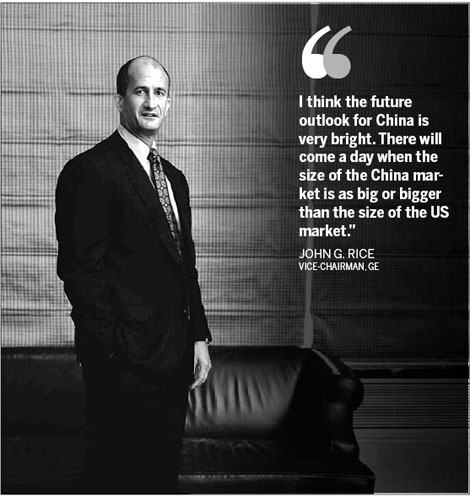
Recently US companies have been in the news; see 'Obama Appoints GE's job killing former CEO to Council on Jobs and Competitiveness. Mr. Nuts on China now Heading US Job Effort.I would assert that who better than to consult on the 'competitive advantages' or lack thereof of US companies and workers as judged in comparison to the global marketplace? Should we have CEOs' who have no exposure or understanding of the issue? Wouldn't the proverbial "devils advocate' be the best person to poke holes in and improve a future US Policy? But I digress....
Source: Asia Matters
There is no doubt, there is and has been (for the last 20 years) a surge of manufacturing outsourcing to "emerging markets", not just China, but all over Southeast Asia, South America, and even former Eastern European countries. And, anyone who has called a customer service number knows that technical support and customer service call centers have been outsourced to India, Cebu, Panama, and even South Africa. Yes, we need to address why these countries have better bids on service and manufacturing jobs. We also need to accept that in most cases, the quality being delivered is equal if not superior to what their US competitors can offer in the same price point. 

....all of the above can be filed under the 'W' Weakness and 'T' for Threat in a standard SWOT analysis
But What about the other components in a SWOT? What are the Strengths the US service and manufacturing sectors can offer? And what Opportunities are available to these sectors because of the current global economy. And, why are some companies and States better at spotting the opportunities and seize on an action plan.


Source: Asia Matters for America

So ....here is an Opportunity...seize it! 
China's Massive construction booms in the Emerging Markets, including China create massive opportunities for designers, suppliers, and contractors. Blue collar,white collar, and green collar! The secret is listening for the opportunities, learning how to participate, and delivering a great product in order to grow business.
The original Article 
"Lighting Empire" , from Lighting April 8, 2011
With almost a quarter of the world’s population and the second largest economy after the US, China has immense potential for lighting designers and manufacturers. Andy Pearson investigates the opportunities. ..." Continue Reading >>
"....China is one of the world’s largest producers and consumers of lighting products. In 2008 it produced more than 15.4 billion lamps and that figure is increasing every year..... " Continue Reading >>
Be Local, Act Local, Win Local Business
Shanghai Abacus Lighting
"....Another prerequisite for selling into the Chinese domestic market is an ability to converse with customers. “I would recommend that the person running the operation is fluent in Mandarin,” says Morris-Richardson. Luise Schafer, vicechair of Abacus’ Shanghai arm, is fluent in Mandarin and it was her presence in China that gave Abacus the confidence to go it alone.....  Continue Reading >>
"....Caton’s advice for designers who want to enter the Chinese market is: “Develop contacts in China that know the market and culture because it will help you avoid pitfalls along the way”. He says PJC Lighting Design has no plans to open an office in China. “We manage very well handling schemes from London - we do have contacts in Hong Kong that  we use if necessary, but we do not have a formal relationship with them....” Continue Reading >>
"....Other lighting designers have not been so successful in China. Kevan Shaw, design director at Kevan Shaw Lighting Design says: “China is a very different place to do business, you have to be aware of the culture and you have to be able to stand up to pressure - to do more than you have agreed to do....” Continue Reading >>
Infrastructure Development Opportunities
"...Other lighting manufacturers are well established in China. Philips is one of the biggest, with 12 factories and a workforce of more than 10,000 employees. GE is another manufacturer with a major presence in China. Like Abacus, it is focused on the infrastructure business, which has developed as a result of the migration of the population into towns..." Continue Reading >>
"....The expansion of the market in China has also helped Hayakawa, a manufacturer and supplier of wire harnesses and cables, which has opened two factories in the country...." Continue Reading >>
International and Domestic Clients Need Expertise in China
"....Currently PJC Lighting Design is working on retail projects in Beijing, Shanghai and Hong Kong. Two of the projects are for local clients, the other is for an international client. Caton says the mix of projects is usually about 50:50 between international and domestic clients. “We usually get work through recommendation from an architect or interior designer who is more often than not based in London,” he explains..."  Continue Reading >>

Additional related reading:

Wednesday, April 20, 2011

The Importance of EXCEEDING Customer Expectations

Business Stripped Bare: Adventures of a Global Entrepreneur
Excerpt from,
Business Stripped Bare:
 "Adventures of a Global Entrepreneur"
Source: I discovered this article via twitter from @EntMagazine. You can also follow @RichardBranson for more great business insights.


This is a insightful, clearly written article about delivering expectations - actually - about EXCEEDING Expectations. And the simple ways a business can do that. And, the key role the founder and later 'leader' must stay involved in the process, in touch with customers and employees, and always, always true to the core values of the BRAND.

This is an edited excerpt from Richard Branson's book Business Stripped Bare: Adventures of a Global Entrepreneur (Virgin Books, 2010).

Business & Small Business Home

The celebrated entrepreneur's advice for delivering on your business promises.

By Richard Branson   |   April 20, 2011 from Entrepreneur Magazine


So you have an idea for a business -- one that you believe has the potential to alter the industry. You put together a straightforward proposition, raised the necessary capital, gathered a team and publicized your new venture by every means available. What happens next?
It's time to deliver on your promises. And the only difference between merely satisfactory delivery and great delivery is attention to detail.

Anyone who aspires to lead a company must develop a habit of taking notes. I carry a notebook everywhere I go. Most of my entries are like this one, from a Virgin Atlantic flight years ago: 

"Dirty carpets. Fluff. Areas around bow dirty. Equipment: stainless steel, grotty. Choice of menu disappointing -- back from Miami, prawns then lobster (as a main course) in Upper Class. Chicken curry very bland. Chicken should be cut in chunks. Rice pretty dry. No Stilton available on cheeseboard."
What's most revealing is this final note: 
"Staff desperate for someone to listen. Make sure flight staff reports are actioned IMMEDIATELY." 
.....I'm pleased to say they now are. 
This is the key to getting all the other items on the list done -- employees are better able to report problems and get them fixed before I come along with my notebook.
And as you decide how best to deliver your product or service, keep in mind the company's core business values, the medium-term strategic considerations and where the industry is headed in the long term
Make your decisions on the micro level in light of that bigger picture, and your business should be headed in the right direction.
This problem-solving process should not be limited to the launch. Owners and leaders of established companies should sample their business's products as often as possible. Many bosses regularly speak to staff at all levels, but often they do not follow up on problems they uncover. This means their employees never learn what importance the CEO places on getting the details right, or see just how necessary and possible it is to address the everyday problems that come up. If you foster a culture of waiting for someone else to solve problems, the company will suffer the consequences.
Great delivery also depends on great communication, which should start at the top. Be brave: hand out your e-mail address and phone number. Your employees will know not to misuse it or badger you, and by doing so, you will be giving them a psychological boost -- they will know they can contact you anytime a problem comes up that requires your attention. (twitter is also a great way to 'hand out' empower your customers or potential customers with the ability to communicate directly with you.)
Instilling attention to detail throughout your new company will prove especially important when the business begins to gain ground. Employees across the business should be focusing on getting it right all day, every day.
  • A few years ago, I saw warning signs that we were starting to stumble when I received a letter from a couple who had planned to travel on Virgin Trains in Britain. We had seen a rapid 50 percent increase in passenger numbers, and suddenly people were finding it difficult to get a seat on the busier routes. The letter writers had not realized that they now had to book seats in advance. When they arrived at the station, they found the staff unhelpful. Given that the husband was disabled and needed assistance, this was pretty terrible of us.
I personally helped them, and in the process became concerned about the bigger picture for this company. I asked Ashley Stockwell, the brand and customer service guardian (note that he strongly correlates customer service 'guardian' (not representative) with the term brand - the customer service agents are the first contact experience for many companies with their customers. they are your brand - for good or bad or, indifferent.) for Virgin Group, to take a look. Thanks to our renewed focus on delivering great service and attention to detail, we got better and soon received plaudits. 
Finally, if you do start to see success in the form of new and repeat business, remember to keep a cool head. You're delivering change, and if you are succeeding, other businesses are probably getting hurt. They will try to shut you down.
Be sportsmanlike, play to win, and then befriend your enemies. If you do fall out with a partner, colleague or competitor, call that person a year later and take him out to dinner. It is likely you have a great deal in common. After all, why did you both get into the business in the first place? To deliver change, serve customers, and reform an industry. Now, what can you create together?
This is an edited excerpt from Richard Branson's book Business Stripped Bare: Adventures of a Global Entrepreneur (Virgin Books, 2010).
Related Posts Plugin for WordPress, Blogger...