I just posted a podcast to the ASFD blog that I think is great for anyone business. And, in the home furnishings industry which is notorious for intellectual property violations and infringements.
This is an area that is sporadically addressed and prosecuted. However, it has become increasingly important for brands (designer, manufacturer, retailer) to differentiate their products in order to distance their products from the 'commodity' price point. And to become known as 'innovators' rather than followers. In order to build and protect the investment in research and product development (including sourcing) companies in the Home Furnishings Industry will need to enforce their intellectual property rights. And, in order to do that, companies and leaders will need to know their rights both in the US and abroad. This podcast is a good start to that education. Enjoy
Branding will be a future topic of my blog, so please watch for those forthcoming posts.
Also, there is a link on the ASFD web-site to the Womble Carlyle Law Firm blog. Specializing in the Home Furnishings industry, and a longtime ASFD member, Jack Hicks is an excellent resource on the topic of Intellectual Property rights in the Home Furnishings Industry.

Showing posts with label global sourcing. Show all posts
Showing posts with label global sourcing. Show all posts
Wednesday, June 29, 2011
Thursday, April 21, 2011
Today's Blog Readings and My Related Rant
There is a whole lot of bellyaching going on about the blue color and white color opportunities that are being 'stolen' by Chinese companies, and I fear it will only grow as we approach the 2012 Election Season. The complaints are coming from the left, right, center, and everyone in between. It isn't a partisan issue, this is an employment and economic issue.
Recently US companies have been in the news; see 'Obama Appoints GE's job killing former CEO to Council on Jobs and Competitiveness. Mr. Nuts on China now Heading US Job Effort." I would assert that who better than to consult on the 'competitive advantages' or lack thereof of US companies and workers as judged in comparison to the global marketplace? Should we have CEOs' who have no exposure or understanding of the issue? Wouldn't the proverbial "devils advocate' be the best person to poke holes in and improve a future US Policy? But I digress....
.gif) |
| Source: Asia Matters |
There is no doubt, there is and has been (for the last 20 years) a surge of manufacturing outsourcing to "emerging markets", not just China, but all over Southeast Asia, South America, and even former Eastern European countries. And, anyone who has called a customer service number knows that technical support and customer service call centers have been outsourced to India, Cebu, Panama, and even South Africa. Yes, we need to address why these countries have better bids on service and manufacturing jobs. We also need to accept that in most cases, the quality being delivered is equal if not superior to what their US competitors can offer in the same price point.
....all of the above can be filed under the 'W' Weakness and 'T' for Threat in a standard SWOT analysis
But What about the other components in a SWOT? What are the Strengths the US service and manufacturing sectors can offer? And what Opportunities are available to these sectors because of the current global economy. And, why are some companies and States better at spotting the opportunities and seize on an action plan.

China's Massive construction booms in the Emerging Markets, including China create massive opportunities for designers, suppliers, and contractors. Blue collar,white collar, and green collar! The secret is listening for the opportunities, learning how to participate, and delivering a great product in order to grow business.
The original Article
"Lighting Empire" , from Lighting April 8, 2011
 With almost a quarter of the world’s population and the second largest economy after the US, China has immense potential for lighting designers and manufacturers. Andy Pearson investigates the opportunities. ..." Continue Reading >>
"....China is one of the world’s largest producers and consumers of lighting products. In 2008 it produced more than 15.4 billion lamps and that figure is increasing every year..... " Continue Reading >>
Be Local, Act Local, Win Local Business

"....Another prerequisite for selling into the Chinese domestic market is an ability to converse with customers. “I would recommend that the person running the operation is fluent in Mandarin,” says Morris-Richardson. Luise Schafer, vicechair of Abacus’ Shanghai arm, is fluent in Mandarin and it was her presence in China that gave Abacus the confidence to go it alone..... Continue Reading >>
"....Caton’s advice for designers who want to enter the Chinese market is: “Develop contacts in China that know the market and culture because it will help you avoid pitfalls along the way”. He says PJC Lighting Design has no plans to open an office in China. “We manage very well handling schemes from London - we do have contacts in Hong Kong that we use if necessary, but we do not have a formal relationship with them....” Continue Reading >>
"....Other lighting designers have not been so successful in China. Kevan Shaw, design director at Kevan Shaw Lighting Design says: “China is a very different place to do business, you have to be aware of the culture and you have to be able to stand up to pressure - to do more than you have agreed to do....” Continue Reading >>
Infrastructure Development Opportunities
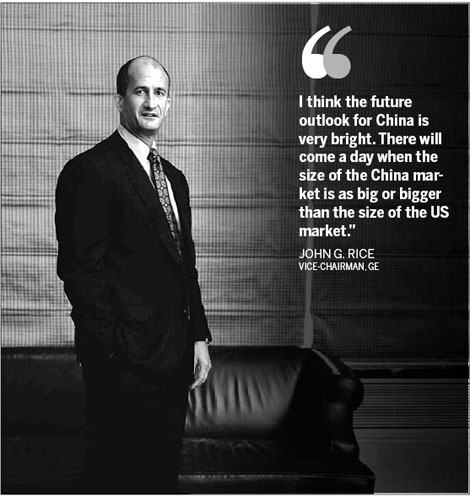
"...Other lighting manufacturers are well established in China. Philips is one of the biggest, with 12 factories and a workforce of more than 10,000 employees. GE is another manufacturer with a major presence in China. Like Abacus, it is focused on the infrastructure business, which has developed as a result of the migration of the population into towns...". Continue Reading >>
"....The expansion of the market in China has also helped Hayakawa, a manufacturer and supplier of wire harnesses and cables, which has opened two factories in the country...." Continue Reading >>
International and Domestic Clients Need Expertise in China
"....Currently PJC Lighting Design is working on retail projects in Beijing, Shanghai and Hong Kong. Two of the projects are for local clients, the other is for an international client. Caton says the mix of projects is usually about 50:50 between international and domestic clients. “We usually get work through recommendation from an architect or interior designer who is more often than not based in London,” he explains..." Continue Reading >>
Additional related reading:
Wednesday, February 16, 2011
Why Does the US Subsidize the Cotton Industry?
** updated 06-16-2011** see below...
.........................................
So... here is a rant I started writing about 3 months ago...(i start a lot of rants and then...kinda fade out...never quite finishing them :-)
this one is coming back to life, because it seems the "mainstream" media has just learned of the cotton price issue.
the top stories are that our Hanes Boxers are going to rise $2, or our t-shirts from $9 to $11.
Perhaps the connection in the massive rise in commodity prices could be linked to the social network revolution which has started in the near east...but will very likely spread to the far east -..... let's get some coverage of that rather than the undergarmet section of the local WalMart please....
Ok - now to the original Rant -
***********************
Cotton, is now the "Fabric of Our Lives", but not long ago, the industry was struggling to survive after losing 50% of it's market share to the miracle fabric Polyester. Cotton Demand Soaring Beyond Supply

 From Cotton Inc "In 1960, cotton apparel and home fabrics accounted for about 78% of all textile products sold at retail. By 1975, that share had plummeted to an all-time low of 34%, due to the successful incursion of synthetic fibers [read polyester] in the marketplace, threatening the extinction of cotton as a viable commercial commodity.
"Polyester was first introduced to the American public in 1951. It was advertised as a miracle fiber that could be worn for 68 days straight without ironing and still look presentable." (Source Peter Schwartz)
November 16, 2010 From Bloomberg News
 Updated 06-16-2011
Just catching up on my Planet Money Podcast backlog...and they have a podcast that is very relevant to this rant.
"Why U.S. Taxpayers Are Paying Brazilian Cotton Growers".
"......In other words, the United States and Brazil are in the middle of a war over cotton. It's an emotional and quiet war complete with global retaliation and a $147 million bribe. It all started with a man named Pedro Camargo...."
You can read about it here and listen to the podcast online here.
More links related to this rant:
.........................................
So... here is a rant I started writing about 3 months ago...(i start a lot of rants and then...kinda fade out...never quite finishing them :-)
this one is coming back to life, because it seems the "mainstream" media has just learned of the cotton price issue.
the top stories are that our Hanes Boxers are going to rise $2, or our t-shirts from $9 to $11.
Perhaps the connection in the massive rise in commodity prices could be linked to the social network revolution which has started in the near east...but will very likely spread to the far east -..... let's get some coverage of that rather than the undergarmet section of the local WalMart please....
Ok - now to the original Rant -
***********************
Cotton, is now the "Fabric of Our Lives", but not long ago, the industry was struggling to survive after losing 50% of it's market share to the miracle fabric Polyester. Cotton Demand Soaring Beyond Supply
 From Cotton Inc "In 1960, cotton apparel and home fabrics accounted for about 78% of all textile products sold at retail. By 1975, that share had plummeted to an all-time low of 34%, due to the successful incursion of synthetic fibers [read polyester] in the marketplace, threatening the extinction of cotton as a viable commercial commodity.
"Polyester was first introduced to the American public in 1951. It was advertised as a miracle fiber that could be worn for 68 days straight without ironing and still look presentable." (Source Peter Schwartz)
Historically, cotton farmers ended their involvement with a crop at point-of-sale, confident in the market's ability to take up the cotton crop. But the new competition from petroleum-based fiber producers presented a major disadvantage for cotton, as polyester was aggressively marketed and merchandised at every point throughout the pipeline: from mills and manufacturers, to retailers and consumers.
Reacting to the serious erosion in cotton's consumer market share, producers ...called for a collective national marketing and research effort...the cotton growers were successful in petitioning Congress into passing the Cotton Research and Promotion Act of 1966. The act established a funding mechanism, based on producer assessments, for the purpose of conducting a wide scale effort to recapture cotton's market share. This funding mechanism led ultimately to the creation of Cotton Incorporated in 1970....
This Act of Congress strikes me as a protectionist measure not against another nation, but against a different industry within the US. Perhaps the government funding was justified as a David and Goliath story, wherein Dupont [NYSE: DFT] and Eastman Chemicals [NYSE:EMN] played the part of Goliath and the individual, small, "mom and pop" cotton farmers were David.
Regardless, 44 years later the US Government is still subsidizing the Cotton Industry "to the tune of about US$3 billion per year." In fact, as Congress cries foul against China's infrastructure investments as unfair trade pratices and subsidies, the US is violating the WTO anti-duping rules left and right, starting with the Cotton Industry.
From the beginning, Cotton Incorporated adopted a "push/pull" marketing strategy. The objective was to "push" cotton textile innovations into the market through product and process development, while building consumer demand, or a "pull," through advertising and promotion.
By 1983, Cotton Incorporated succeeded in curtailing share decline...Today...cotton share is more than 60% of the marketplace.
The following timeline describes some of the more notable Cotton Incorporated milestones and strategic initiatives, which have helped the company achieve cotton's current share of the home and apparel textile markets"
(BN)
Gap, Wal-Mart Clothing Costs Rise on ‘Terrifying’ Cotton Prices
 |
| Reuters |
Gap Inc (NYSE: GPS)., J.C. Penney Co.(NYSE: JCP) and other
U.S. retailers may have to pay Chinese suppliers as much as 30 percent more for
clothes as surging cotton prices boost costs. “It’s a little terrifying to deal with cotton suppliers
now,” said Vicky Wu, a sales manager at Suzhou Unitedtex Enterprise Ltd., a
closely held, Jiangsu province-based clothes maker..."
Cotton futures in China have surged more than 70 percent
this year...“American consumers better get used to rising prices on
the shelves of Wal-Mart (NYSE: WMT) and other retailers,” said Jessica Lo, Shanghai-based
managing director at China Market Research Group... ”
Shandong Zaozhuang Tianlong Knitting Co., which makes Polo
Ralph Lauren Corp. (NYSE: RL) T-shirts and track suits for Le Coq Sportif Holding SA, has
raised prices as much as 70 percent from a year earlier, said sales manager
Fred Hu. “If cotton keeps rising like this, we will need to lift prices by 30
percent by the Spring Festival next year or we lose money.”
“We can give clients a price now, but it will only be
valid for a week,” said Tianlong’s Hu.
Just catching up on my Planet Money Podcast backlog...and they have a podcast that is very relevant to this rant.
"Why U.S. Taxpayers Are Paying Brazilian Cotton Growers".
"......In other words, the United States and Brazil are in the middle of a war over cotton. It's an emotional and quiet war complete with global retaliation and a $147 million bribe. It all started with a man named Pedro Camargo...."
"U.S. cotton farmers, Pedro says, get subsidies from the U.S. government that add up to somewhere between $1.5 billion and $4 billion a year.
"We want to compete farmer against farmer," Pedro says. "Not Brazilian farmer and the American farmer with the help of the United States government."
"We want to compete farmer against farmer," Pedro says. "Not Brazilian farmer and the American farmer with the help of the United States government."
He says the U.S. isn't following the World Trade Organization's rules of global trade — rules that the U.S., Brazil and 151 other countries have agreed to follow."
You can read about it here and listen to the podcast online here.
More links related to this rant:
- http://www.bloomberg.com/news/2010-11-16/gap-wal-mart-clothing-suppliers-raise-prices-on-terrifying-cotton-costs.html
- http://www.cotton.org/
- http://www.cottoninc.com/aboutcotton/companyhistory/
- http://www.washingtonpost.com/wp-dyn/content/article/2010/06/02/AR2010060204228.html
- http://reason.com/blog/2010/06/04/us-cotton-subsidy-shame
- http://www.wto.org/english/tratop_e/agric_e/cotton_subcommittee_e.htm
Monday, November 15, 2010
Business: Articles of Interest From Today
Toyota in Guangzhou

"I visited the district of Nansha in an eastern area of Guangdong that was primarily agricultural only five years ago. Now there has been extensive development, with the population going from 40,000 to 260,000 in just a few years.
One of the largest parts of the development in Nansha District is a large Toyota factory, opened in 2006 and now producing 360,000 cars a year. This plant is a joint venture with Guangzhou Automobile Group (GAC). The factory employs about 7,000 workers in two shifts, and it embodies one of the most recent examples of the Toyota production system. A vehicle passes by every 68 seconds, so a new Toyota exits to the test track every 68 seconds as well..."
>> Continue Reading
Shanghai Shares a "Mindful" Vision for Sustainable Living Urban Living
 |
| Pavilion of the Future, Agriculture |
"Thinking back to when I first heard of the expo event, it was the theme “Better city, Better life” that attracted me to the event....The magnitude of the Chinese industrial revolution coupled with the challenging demographics and the birth of a new Chinese consumer market was the other key reason for the visit. I admit that upon embarking on the journey I was a skeptic about China’s sincerity about a “Better city Better life” given all the press I have read here in the U.S.
....China’s urban reality will explode within the next forty years, thus requiring China to balance its economic with that of the population growth in order to sustain it’s overall development momentum. So it should really be of no surprise to find China being so proactive, engaged and at the forefront of efforts to improve the possibilities in sustainable urban living...."
>> Continue Reading
>> Continue Reading
Department of Commerce Assigns Preliminary Duties on Two Asian Innerspring Makers
November 11, 2010, Furniture Today
Foshan Jingxin, Top One Mfg, get duty of 234.51% for not responding to review questionnaires.
WASHINGTON, D.C. — The U.S. Department of Commerce has assigned preliminary duty rates of 234.51% to two companies that had been named in an annual administrative review in the Uncovered Innerspring Units antidumping case.
The two companies are Foshan Jingxin Steel Wire & Spring Co. Ltd. and Top One Manufacturing Factory, both Chinese producers.
The review, the first in the innerspring case, began on March 30. The review affects shipments of Chinese made innersprings between Aug. 6, 2008 to Jan. 31, 2010.
The two companies were the only ones named in the review.
The DOC said it assigned the all- China rate of 234.51% to these companies because they did not respond to questionnaires it issued during the annual review process. Foshan Jingxin had previously been assigned this rate in early 2009. It was unclear what rate had previously been assigned to Top One.
The DOC is expected to assign final rates to these companies within 120 days of the publication of the preliminary rates, which would be in early March.
The rates assigned to these factories are paid by importers of record of the subject merchandise. This merchandise includes uncovered innerspring units used in adult, youth and crib mattresses. For a full description of the scope of the order, visit this link.
November 11, 2010 by Larry Thomas in Furniture Today

MARTINSVILLE, Va. — Hooker Furniture said it will shut down one of two manufacturing sites for its Bradington-Young upholstery unit and consolidate finished goods production into the upholstery producer's Hickory, N.C., plant by mid-January.
Hooker said the 140,000-square-foot Cherryville, N.C. plant will be closed because it is older and not as efficient as the 100,000-square-foot Hickory facility.
Alan Cole, president of Hooker Upholstery, said a majority of the 121 Cherryville employees will be offered transfers to Hickory, as will an undetermined number of additional employees at Bradington-Young's corporate office in Cherryville.
About 75 people now work at the Hickory site.
"Because of the greater efficiencies in our existing Hickory plant, the availability of highly skilled and productive labor in the area and the lower costs and fewer complexities of operating one finished goods manufacturing facility, we see this as a very positive move for Hooker and Bradington-Young," said Cole.
He said the company's domestic leather upholstery sales declined from 2005 to 2009, but have increased at a double-digit rate over the last four quarters.
"In the short-term, we expect the move will enable us to reduce redundancies and significantly lower our break-even point with the goal of achieving profitability at current sales levels," Cole said. "In the long-term, this can be a great launch pad for growth."
Once the consolidation is finalized, the Hickory plant should be operating at near capacity, he said.
Cole said approximately 80 employees will remain at Bradington-Young's leather cutting and sewing operation in a separate, existing facility in Cherryville. It will continue to supply covers to the Hickory plant.
This is a great article with actionable points as well as wonderful insights that will help you and your business in 2011.
November 4, 2010 by Robert Passikoff The Branding Strategy Insider Blog
1) Value is What the Consumer Says It Is...
2) Brand, Meet Value....
3) Zappos-ification...
Tuesday, October 19, 2010
Business: Enough with the Protective Posturing U.S.!
Warning: I'm on a tear
here...so if you aren't in the mood for a cranky, one sided, very editorial
read. Stop now. Maybe read Don't worry be happy.
........................................................................................................
The U.S. is now investigating China for unfair trading practices through their subsidizing
innovation in Green Technology? Really?
10/15/10 From Office of The United States Trade Representative, an Executive office of the President
United States Launches Section 301 Investigation into China’s Policies Affecting Trade and Investment in Green Technologies
"...the investigation has been initiated in response to a petition filed by the United Steelworkers (USW) on September 9, 2010." >>read more
We
(Americans) would be so lucky to
have a government which promotes and support Green Tech Innovation !(And I'm
talking about everyone from the Whitehouse, Congress, State Governments, and
even Local Municipalities.)
Does that mean if the US finally does support Green Tech that 'we' are engaged in unfair trade practices?
What
about if a State (Michigan
or California for
example) provides tax incentives to Green Tech
innovation? Does that mean just California is practicing 'unfair' trade, but
the US isn't? Ugggh.
Why? (为什么?Wei Shenme? Porqué, perché?) Why? does the US refuse to learn from the runners at the front of the marathon? Are we just to vain?
It
seems to me the US is acting like Tanya
Harding in that 'our' big plan is to
take a pipe to the back of China's leg, thinking that will put them out of the
competition. Remember how well that worked out for Tanya? Perhaps
rather than smack down the "competition" we should watch China's technique and
learn. (Further
reading on this topic: All
I Really Needed to Know I Learned In Kindergarten)
Did we not learn anything from the emergence of Japan in the 1980s?
Remember
when if something was Made in Japan that meant it was automatically considered
junk? Well look at their products now. Products labeled as made in Japan (or even
branded by Japanese companies and made elsewhere) are now synonymous with innovation, superior
quality, and beautiful design. The US completely discounted the possibility of
a Japanese manufacturing that could grow from tourist trinkets to Electric
Vehicles. The United States must learn to move forward and innovate constantly.
Is
the US just stuck in the same 'head in the sand' mindset that I witnessed
firsthand in the Home Furnishings Industry 10 years ago?
Since
my first trip to Asia for product sourcing in 1997, when I returned to the US
and traveled to North Carolina to attend the "International" Home
Furnishings Market, I felt like I was in a different dimension as I listened to
the 'good ole boys' going on and on about how the "Chinese could never
produce the quality of the US furniture makers."
Meanwhile
I was traveling to China (not to mention Malaysia, Thailand, Taiwan (in the old
days) and Vietnam (since the US restrictions were dropped in 2001) and
witnessing factories grow from garage size manufacturing to 2million square
foot factories in just a few years. And yes, their growth was helped by
supportive government taxes, incentives, and low land lease rates. But isn't
that what a good government should do when they are trying to support
businesses?
And
since my first trip in 1997 I saw components of major high end US furniture
makers in overseas factories. And present day, I see products from roughly 95%
of all of the great US Furniture" brands going down production lines all
over Asia.
I
don't think most consumers know that even when they buy a $4000 dining table,
most likely it was made in Asia somewhere or, at a minimum the parts were made
there and brought in and finished and assembled in the US. (That little trick
allows a 'Made in the USA' label on the product.)
And
how have the protectionist, anti-dumping duties on 'wooden bedroom furniture'
benefited US Furniture Makers?
Not
much, except for collecting their portions of the duties collected (which
ranged from 0.5% to 198%). What have these US Manufactures' who
filed the lawsuit and subsequently received their percentage of the collected
duties done with that money? (Millions
of dollars!) ? I
honestly don't know the laws regulating the disbursement of the millions of
dollars that are collected. But I assert that it should be divided into a trust
and a large portion should be allocated towards worker retraining/education. (Ahhg, but that's a whole different rant of mine).
So, with massive
punitive anti-dumping duties, why are 95% of US Furniture 'Manufactures'"
still sourcing their products from Asia?
The
simple answer is:
Because they have switched their production to other countries to avoid the
duties, but maintain lower manufacturing costs than they can achieve in the US.
The
longer story and history is that it has been relatively easy
for manufactures to migrate from China to Vietnam (and elsewhere) to avoid the
duties:
- Taiwan - a large majority of furniture companies got their start in tiny small factories in Taiwan in the 1970s and 80s.
- China - Then in early 1990s when China opened Southern China into an 'economic development zone' and enticed foreign investment through beneficial taxes, land lease rates, and infrastructure growth, the Taiwanese factories set up a 2nd shop in China. These new factories were 100 times the size of their Taiwan facilities and with lower labor rates they were able to grow through capacity and margin increases. Eventually most shuttered their Taiwan factories, using their valuable land in Taiwan for something more profitable, (like building condos.)
- Vietnam - When whispers the anti-dumping duties emerged at the end of the 1990s, those same Taiwanese factory owners built factories 20 times bigger than their Chinese factories (I'm talking huge! 20million square feet. They have their own hotels at these factories for their customers!) Again, aside from hedging against the US anti-dumping duties, this business savvy group were also attracted to Southern Vietnam by their economic development zones, amazing infrastructure building, low land costs, and tax breaks. (Hmmm, seems like a pattern developing huh?)
American's, please
consider the advice you would give to your children if they came home with this
conundrum.
A
rival classmate is better at soccer and math. It's not fair.
Would
you reply, "your right honey, it's not fair!... Let's tell the teacher
that they have to give that kid more work and not let them play soccer."
No
(if
you would...please visit Dr.Phil's
website).
More
likely you would say: "Well honey. I think you should make friends with
him and you two can practice soccer and study math together."
So,
in conclusion I recommend that we all reread, and even perhaps post in our
offices : All I Really Needed to
Know I Learned In Kindergarten.
Subscribe to:
Posts (Atom)
